Referred to Rules Committee
Committee
Nay
Fletcher has been active across several areas in the 119th Congress, most often Health Care, Law & Justice and Government.
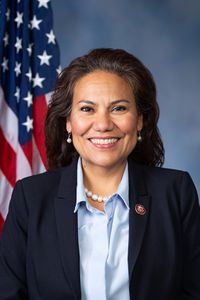
Lizzie Fletcher is a Democratic Representative representing Texas's 7th District in the 119th Congress (2025–2027). Now in their 4th term, they have cast 361 recorded votes, seen 81 measures become law, and sponsored 12 bills. They won their 2024 election with 61.3% of the vote, a 22.6-point margin. Their office has spent $357,179 in taxpayer-funded expenses this period. Up for re-election November 2026.
Each numbered Congress spans two calendar years and is divided into two sessions: the first session (odd-numbered year, e.g., 2025) and the second session (even-numbered year, e.g., 2026). Modern Congresses begin on January 3 of odd-numbered years and end on January 3 two years later, unless a law sets a different date. The House is elected every two years, while Senators serve six-year terms staggered so that roughly one-third of the Senate is up for election every two years.
Referred to Rules Committee
Protecting Privacy in Purchases Act
Referred to Financial Services Committee
Sunshine Protection Act of 2025
Referred to Energy and Commerce Committee
Improving Travel for American Families Act
Referred to Commerce, Science, and Transportation Committee; Homeland Security Committee
Weatherizing Infrastructure in the North and Terrorism Emergency Readiness Act of 2025
Referred to Homeland Security and Governmental Affairs Committee; Homeland Security Committee
Referred to Rules Committee
Referred to Foreign Affairs Committee
Referred to Commerce, Science, and Transportation Committee; Judiciary Committee; Energy and Commerce Committee
TRIA Program Reauthorization Act of 2026
Referred to Banking, Housing, and Urban Affairs Committee; Financial Services Committee
Financial Exploitation Prevention Act of 2025
Referred to Banking, Housing, and Urban Affairs Committee; Financial Services Committee
Small Business Lending Fraud Prevention Act
Referred to Small Business and Entrepreneurship Committee; Small Business Committee
Small Business Technological Advancement Act
Referred to Small Business and Entrepreneurship Committee; Small Business Committee
Referred to Intelligence (Permanent Select) Committee; Judiciary Committee
Referred to Oversight and Government Reform Committee
Stopping Fraudulent Payments Act
Referred to Oversight and Government Reform Committee
Fraud Prevention and Accountability Act
Referred to Oversight and Government Reform Committee
No Aid for Ghost Students Act of 2026
Referred to Health, Education, Labor, and Pensions Committee; Education and Workforce Committee
Referred to Rules Committee
Referred to Rules Committee
Committee memberships will load automatically if available.
No Presidential Self-Serving Lawsuits Act of 2026
Referred to Judiciary Committee
Referred to Homeland Security Committee
Referred to Rules Committee
Referred to Judiciary Committee
Ensuring Womenâs Right to Reproductive Freedom Act
Referred to Energy and Commerce Committee
Referred to Judiciary Committee
Broadband Incentives for Communities Act
Referred to Energy and Commerce Committee
Referred to Energy and Commerce Committee
Referred to Ways and Means Committee
Referred to Financial Services Committee
Referred to Energy and Commerce Committee
Source: MIT Election Data + Science Lab
Source: Federal Election Commission · Candidate ID: H8TX07140 · Through 03/31/2026 · 2026 Cycle
Source: House Statement of Disbursements · Jan 1 - Mar 31, 2020
Federal dollars obligated to this district in FY2025. Reflects ongoing programs and prior authorizations — not decisions by the current officeholder.
Appropriations bills authorize and fund the programs reflected above. This is Lizzie Fletcher's recorded position on the most recent 10 — not a claim that these votes caused the spending figures.
Source: USASpending.gov. Voting records via official House/Senate clerk roll-call data. District map: post-2020 census (118th/119th Congress).
Measured from public voting records, Census district demographics, and CRS bill data. Not an editorial judgment — the same formula applies to every member regardless of party.
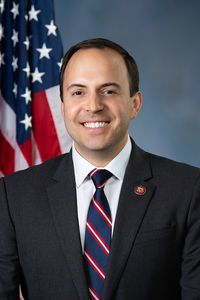
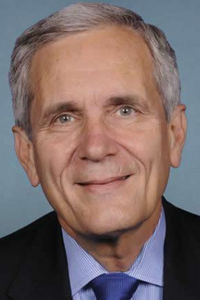
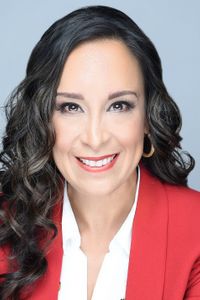
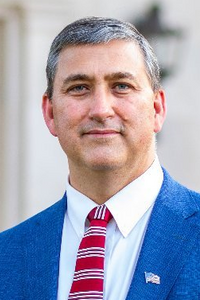
Other members of the 119th Congress representing Texas. View full Texas delegation







Lizzie Fletcher has spent $357,179 in taxpayer-funded office expenses year-to-date (through Jan 1 - Mar 31, 2020), including staff compensation, rent and utilities, travel, and other services. The full breakdown with top vendor recipients is available on this profile's Finance tab.
The Members' Representational Allowance (MRA) covers official office operations. The largest categories are Staff Compensation (90.6%) and Travel (4.4%). All spending is publicly reported through the House Statement of Disbursements.
Lizzie Fletcher won the 2024 general election with 61.3% of the vote (149,820 votes), winning by a margin of 22.6 points against 1 opponent.
Lizzie Fletcher is up for re-election in 2026. Election Day is November 3, 2026. Their current term ends January 3, 2027. They have served 4 terms in this office. All 435 House seats are up every two years.
Lizzie Fletcher's current term ends January 3, 2027. They are up for re-election on November 3, 2026. House members serve two-year terms and face election every cycle.
According to FEC filings, Lizzie Fletcher has raised $1,229,657 in campaign funds, spent $795,425, and has $1,750,894 cash on hand.
Campaign funds are raised from donors for election purposes and regulated by the FEC. Office spending (MRA) is a separate taxpayer-funded budget allocated to each House member for staff salaries, rent, travel, and official duties. The two cannot be mixed — campaign money cannot pay for official expenses and vice versa.