To amend the Small Business Act to require a report on 7(a) agents, and for other purposes.
Referred to Small Business and Entrepreneurship Committee; Small Business Committee
Committee
Yea
Stanton has been active across several areas in the 119th Congress, most often Government, Infrastructure and Law & Justice.
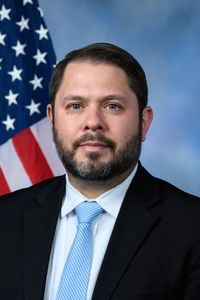
Greg Stanton is a Democratic Representative representing Arizona's 4th District in the 119th Congress (2025–2027). Now in their 4th term, they have cast 361 recorded votes, seen 81 measures become law, and sponsored 27 bills. They won their 2024 election with 52.7% of the vote, a 7.2-point margin. Their office has spent $391,781 in taxpayer-funded expenses this period. Up for re-election November 2026.
Each numbered Congress spans two calendar years and is divided into two sessions: the first session (odd-numbered year, e.g., 2025) and the second session (even-numbered year, e.g., 2026). Modern Congresses begin on January 3 of odd-numbered years and end on January 3 two years later, unless a law sets a different date. The House is elected every two years, while Senators serve six-year terms staggered so that roughly one-third of the Senate is up for election every two years.
To amend the Small Business Act to require a report on 7(a) agents, and for other purposes.
Referred to Small Business and Entrepreneurship Committee; Small Business Committee
Referred to Small Business and Entrepreneurship Committee; Small Business Committee
Referred to Rules Committee
An act to provide for reconciliation pursuant to title II of H. Con. Res. 14.
Referred to Budget Committee
Referred to Rules Committee
Referred to Commerce, Science, and Transportation Committee; Science, Space, and Technology Committee
Referred to Veterans' Affairs Committee; Veterans' Affairs Committee
Referred to Foreign Relations Committee; Foreign Affairs Committee
Referred to Judiciary Committee; Judiciary Committee
Referred to Judiciary Committee; Judiciary Committee
Referred to Rules Committee
Referred to Judiciary Committee
Referred to Judiciary Committee; Judiciary Committee
Referred to Energy and Natural Resources Committee; Natural Resources Committee
Expressing support for local law enforcement officers.
Referred to Judiciary Committee; Judiciary Committee
Referred to Energy and Natural Resources Committee; Natural Resources Committee
To rename the Gulf of Mexico as the "Gulf of America".
Referred to Natural Resources Committee
Referred to Judiciary Committee; Foreign Relations Committee; Foreign Affairs Committee
Referred to Homeland Security and Governmental Affairs Committee; Homeland Security Committee
Referred to Rules Committee
Committee memberships will load automatically if available.
Referred to Homeland Security Committee; Education and Workforce Committee; Judiciary Committee
Extreme Heat Congressional Advisory Commission Act
Referred to Foreign Affairs Committee; Energy and Commerce Committee
Short-Term Holding Facility Standards Restoration Act.
Referred to Judiciary Committee
Semiconductor Controls Effectiveness Act of 2026
Referred to Foreign Affairs Committee
Referred to Transportation and Infrastructure Committee; Natural Resources Committee
Referred to Oversight and Government Reform Committee
EBâ5 Regional Center Program Advisory Committee Authorization Act
Referred to Judiciary Committee
Referred to Transportation and Infrastructure Committee
Referred to Environment and Public Works Committee; Transportation and Infrastructure Committee
Federal Building Threat Notification Act
Referred to Homeland Security and Governmental Affairs Committee; Transportation and Infrastructure Committee
Improving Accessibility Through Microtransit Act
Referred to Transportation and Infrastructure Committee
American Cooperation with Our Neighbors Act
Referred to Foreign Affairs Committee
Referred to Transportation and Infrastructure Committee
Referred to Energy and Commerce Committee
Referred to Transportation and Infrastructure Committee
Referred to Transportation and Infrastructure Committee
Raising concern about the constitutional reforms in Mexico.
Referred to Foreign Affairs Committee
Referred to Rules Committee
Referred to Transportation and Infrastructure Committee
Referred to Transportation and Infrastructure Committee
Urban Waters Federal Partnership Act of 2025
Referred to Appropriations Committee; Natural Resources Committee; Transportation and Infrastructure Committee
Referred to Agriculture Committee
Referred to Veterans' Affairs Committee
Wildfire Response Improvement Act
Referred to Transportation and Infrastructure Committee
Semiconductor Supply Chain Security and Diversification Act of 2025
Referred to Foreign Affairs Committee
Stronger Engagement for Indian Health Needs Act of 2025
Referred to Natural Resources Committee; Energy and Commerce Committee
Source: MIT Election Data + Science Lab
Source: Federal Election Commission · Candidate ID: H8AZ09040 · Through 03/31/2026 · 2026 Cycle
Source: House Statement of Disbursements · Jan 1 - Mar 31, 2020
Federal dollars obligated to this district in FY2025. Reflects ongoing programs and prior authorizations — not decisions by the current officeholder.
Appropriations bills authorize and fund the programs reflected above. This is Greg Stanton's recorded position on the most recent 10 — not a claim that these votes caused the spending figures.
Source: USASpending.gov. Voting records via official House/Senate clerk roll-call data. District map: post-2020 census (118th/119th Congress).
Measured from public voting records, Census district demographics, and CRS bill data. Not an editorial judgment — the same formula applies to every member regardless of party.
Other members of the 119th Congress representing Arizona. View full Arizona delegation